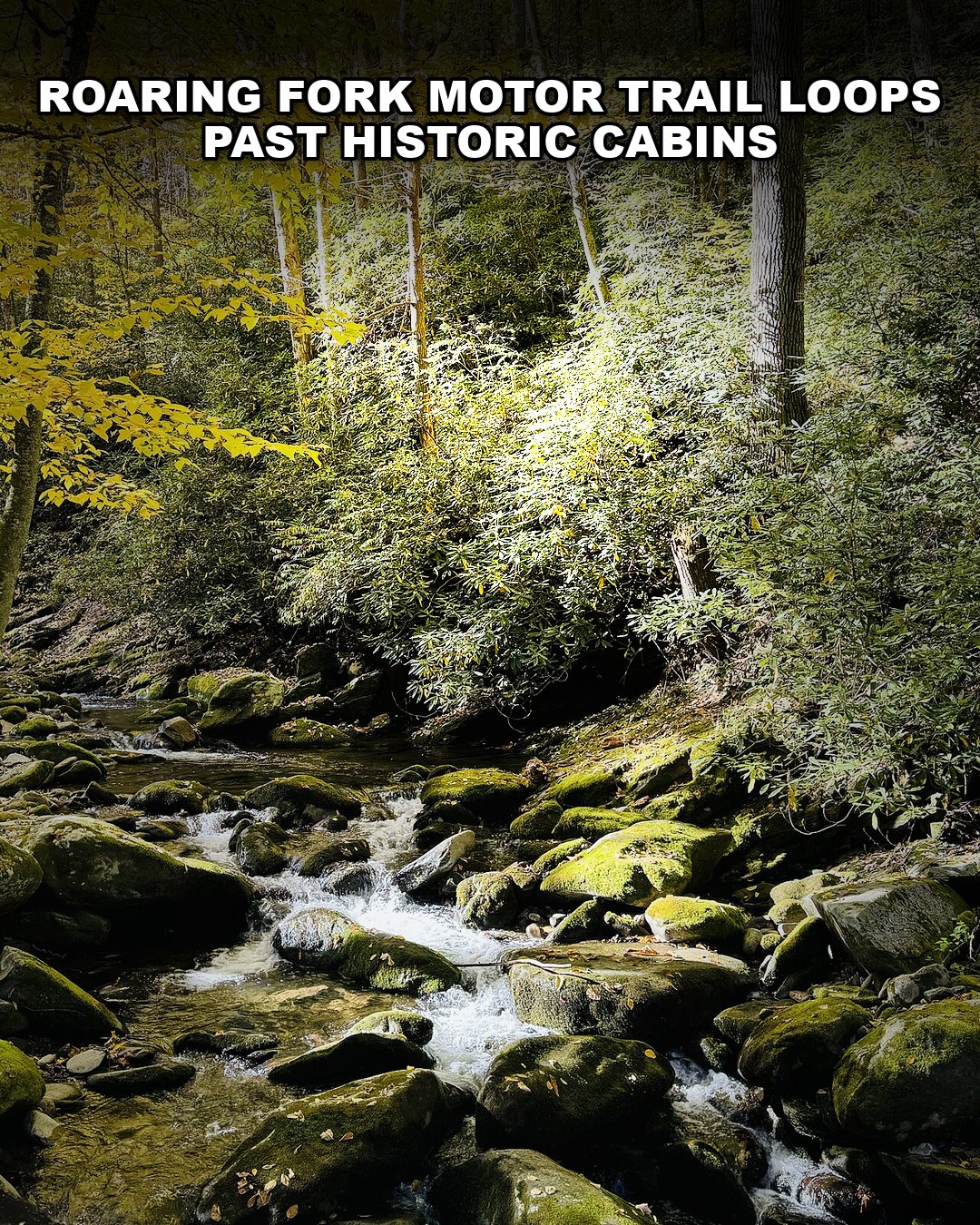
Roaring Fork Motor Trail loops past historic cabins
The Roaring Fork Motor Trail offers visitors a scenic drive through one of the Great Smoky Mountains' most historic areas, winding past preserved log cabins and homesteads that tell the story of early Appalachian settlement.
This one-way loop road begins just outside Gatlinburg and takes drivers on a 5.5-mile journey through dense forest and alongside mountain streams. The narrow, winding route is designed for leisurely exploration, with a speed limit that encourages visitors to take their time and absorb the natural surroundings.
Along the trail, several historic structures stand as reminders of the families who once called this remote valley home. These preserved log cabins and barns showcase the craftsmanship and ingenuity of 19th and early 20th-century mountain residents who built their lives in this rugged terrain. The buildings represent different periods of settlement, offering glimpses into how construction techniques and living conditions evolved over time.
The motor trail also provides access to several hiking opportunities for those wanting to explore beyond the roadway. Nature enthusiasts often spot wildlife along the route, including deer, wild turkeys, and black bears, particularly during early morning and evening hours.
Like other popular driving routes in the area such as Cades Cove, the Roaring Fork Motor Trail can experience heavy traffic during peak tourist seasons. The road typically closes during winter months due to weather conditions, so visitors should check current status before planning their trip.
The combination of preserved history, mountain scenery, and accessible wildlife viewing makes this motor trail a popular choice for families and photographers seeking to experience the cultural heritage of the Smoky Mountains without requiring extensive hiking.
If you're planning a Smoky Mountains vacation that includes multiple attractions like this trail, researching the best travel rewards credit cards can help offset your travel expenses..